Jessica Haley
When we were introduced to Jessica Haley of RODE Architects, we were quickly impressed by her approach to interior design, her portfolio of projects, and the firm’s overall take on A.I.—actual intelligence. We connected with Jessica to learn more about her story and what brought her to where she is today. Meet Jessica.

Meet American designer Jessica Haley.
DS: Hi Jessica, welcome to Design Storytellers! Tell us about your background.
JH: Thank you for having me. I’ve been an interior designer for about 18 years. I am an Interior Designer and Principal at RODE Architects, which is a collaborative design and architecture firm based in Boston. I specialize primarily in hospitality, retail and multi-family projects, among other commercial typologies.
DS: Tell us about your education and professional training. How did you end up in interior design?
JH: I hold a BFA in Fine Arts from the New England School of Art and Design at Suffolk University, and a Master of Interior Architecture from the Boston Architectural College (BAC). I entered college as a graphic design major, but after discovering a love for illustration, I switched to studio arts.
After earning my undergraduate degree, I spent a few years working in the hospitality industry while figuring out my next step. I began exploring both landscape architecture and interior design programs, and the opportunity to pursue interior design came first, so I went in that direction. I’ve always known I wanted to be in a creative profession; I just needed to experiment a bit to find the right fit. The BAC’s model of “concurrent learning” required me to gain professional experience while completing my studies. This approach pushed me to secure an entry-level position at an architectural firm in Cambridge, allowing me to graduate not only with my Master’s degree but also with several years of real-world experience already under my belt.
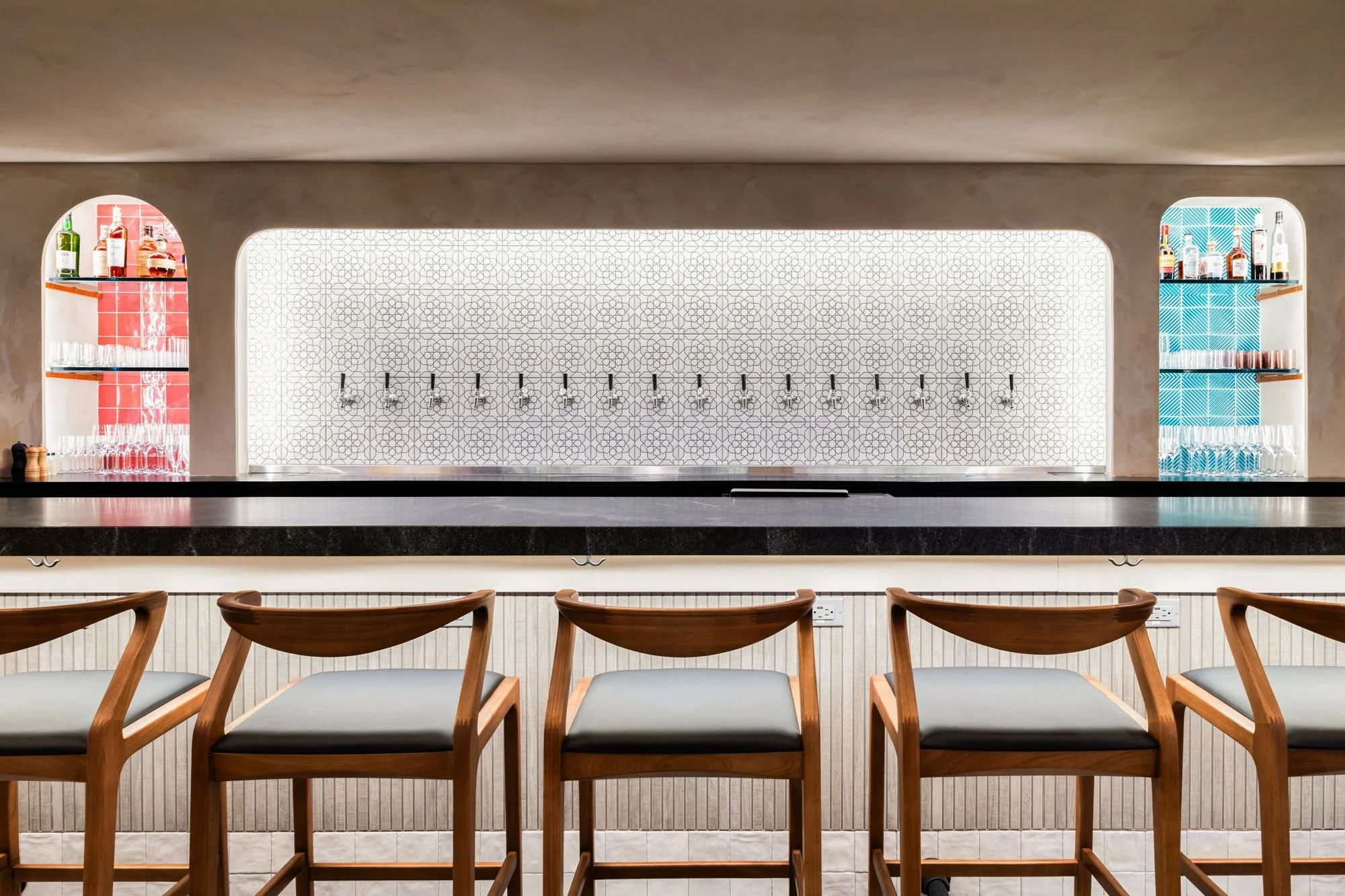
Baleia, a project of Jessica’s
DS: Wow, what an comprehensive and amazing introduction to the industry. You were exposed to so many professional paths and industries. It seems like your career unfolded naturally as you were open to explore opportunities. Do you feel like that was key to where you are today?
JH: Oh absolutely. In fact, my biggest advice to any emerging creatives is to dive in wholeheartedly and not be timid. Say yes to opportunities even when you don’t feel fully ready; that’s often when the best learning happens. Design is a field that rewards curiosity and courage in equal measure. At the same time, learn how to truly listen… to clients, to mentors, to collaborators, and to the spaces themselves.
The ability to absorb different perspectives, distill what matters most, and translate that into design intent is what transforms a good designer into a great one. Balancing those two instincts, boldness and attentiveness, is what allows creativity to thrive in a professional context. Be fearless in your ideas but humble in your process.
DS: Love that, and its so true. You mentioned that you’re largely involved in hospitality, retail and multi-family work. Which projects you are particularly proud of?
JH: Across all of our projects, inspiration starts with curiosity about people, place, and purpose. I look closely at what’s already there, both tangible and intangible, and let those discoveries guide the concept. Every project tells its own story; the job is to listen closely enough to hear it.
Some projects I want to highlight and give attention to are:
Baleia — The inspiration for Baleia, a Portuguese-inspired restaurant in Boston, came from the spirit of Portugal’s coastal towns — places defined by community, craftsmanship, and a deep connection to the sea. We immersed ourselves in imagery of fishing villages, weathered boats, and seaside markets, translating those ideas of rhythm, material honesty, and intimacy into the restaurant’s conceptual DNA. The goal wasn’t to replicate a look, but to capture that sense of authenticity and place, where everyday rituals become something beautiful.
Cambria Hotel Boston — The Cambria drew inspiration from its immediate urban context. Located at the seam between Boston’s historic South End and emerging mixed-use districts, the project became about layering contrasts — old and new, refined and industrial. We studied the city’s brick-and-beam warehouses, the patterns of its streets, and the intellectual energy that defines Boston’s identity. Those observations shaped the design’s conceptual framework: a hospitality experience that feels both rooted and forward-looking.
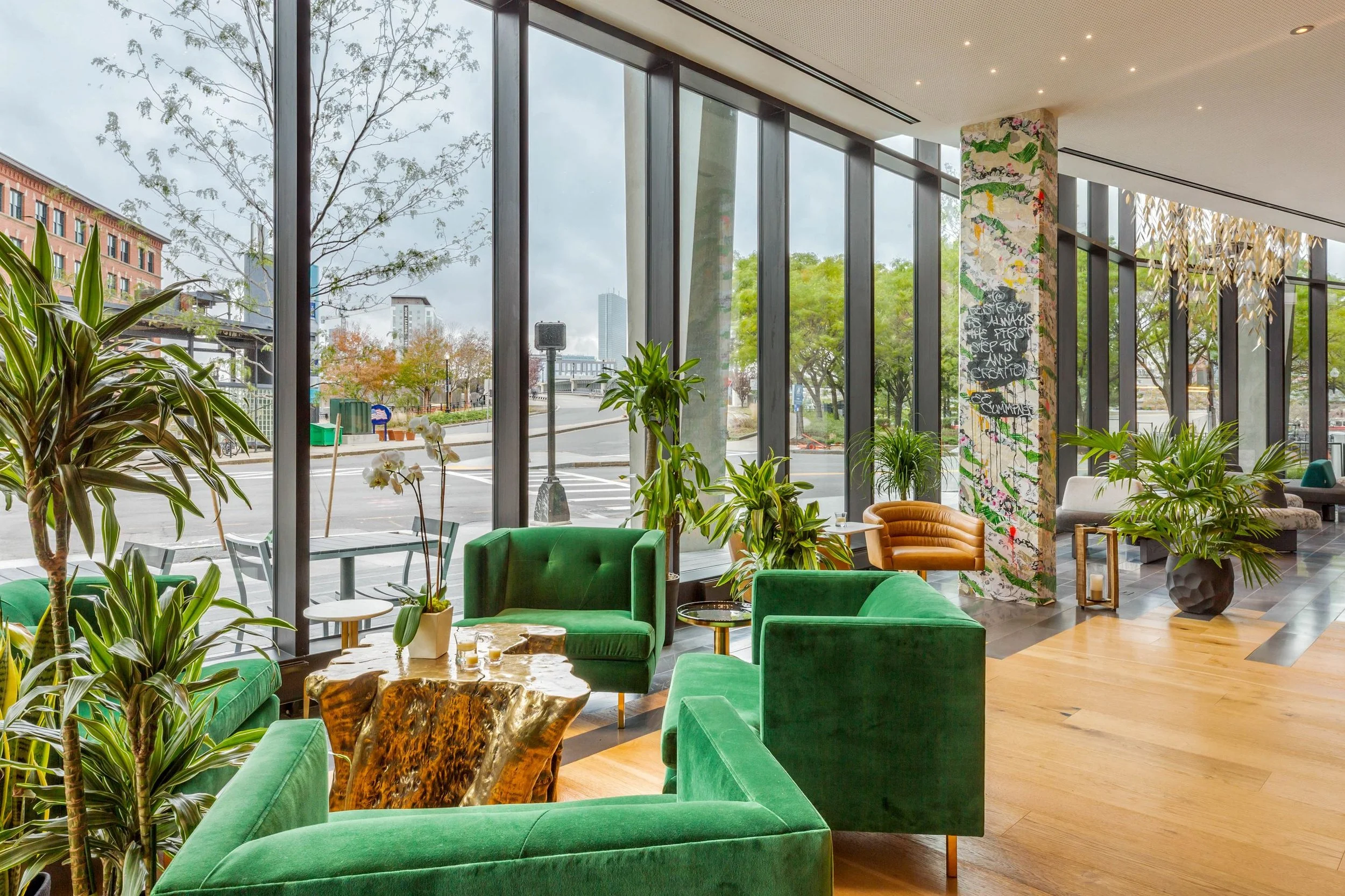
Cambria Hotel, Boston
1515 Commonwealth — The inspiration for this new condo building stemmed from its unique position between city and landscape — where the energy of Boston’s busy Commonwealth Avenue meets the calm of the city’s Emerald Necklace, a 1,100-acre chain of nine parks linked by parkways and waterways. We also drew from the site’s history as a former quarry, using the idea of “granite rising” as a conceptual anchor. That duality — urban vitality grounded in natural strength — guided the project’s architectural and interior expression.
Another key project that comes to mind is SRV, a Venetian restaurant in Boston’s South End that our team at RODE designed about 10 years ago. It was where my personal design approach really clicked, as I realized how layering inspiration and narrative can create something truly immersive. The concept drew from Venice’s balance of history and vibrancy, and it was the first time I saw how that kind of depth could make a space feel both authentic and alive.
DS: Fantastic. Each has such a unique program, influence, and design narrative. What is your approach to a project? How do you begin?
JH: My design approach is very concept-driven and specific to the project’s location, use, and program. Inspiration can come from many places, often rooted in culture, context, and narrative rather than aesthetics alone.
DS: What do you love most about your job?
JH: What’s apparent in the examples above is what I love about what I do — every project is like starting a new job. A new group of people to collaborate with, a new client, a blank slate. It never gets boring or monotonous.
DS: Yes! So well said. What is your favorite material to work with?
JH: That’s a tough one, but I’d have to say lighting. It’s the element that truly sets the mood in a space, especially in hospitality environments, but really in any setting. When done well, lighting has this transformative quality: it can make materials glow, enhance atmosphere, and even make people feel (and look) their best. It’s the quiet hero of design.
DS: What type of design do you feel the most connected to, or drawn towards as a designer and as a guest?
JH: I always gravitate toward designs that feel authentic, places that have soul and reflect the people or purpose behind them.
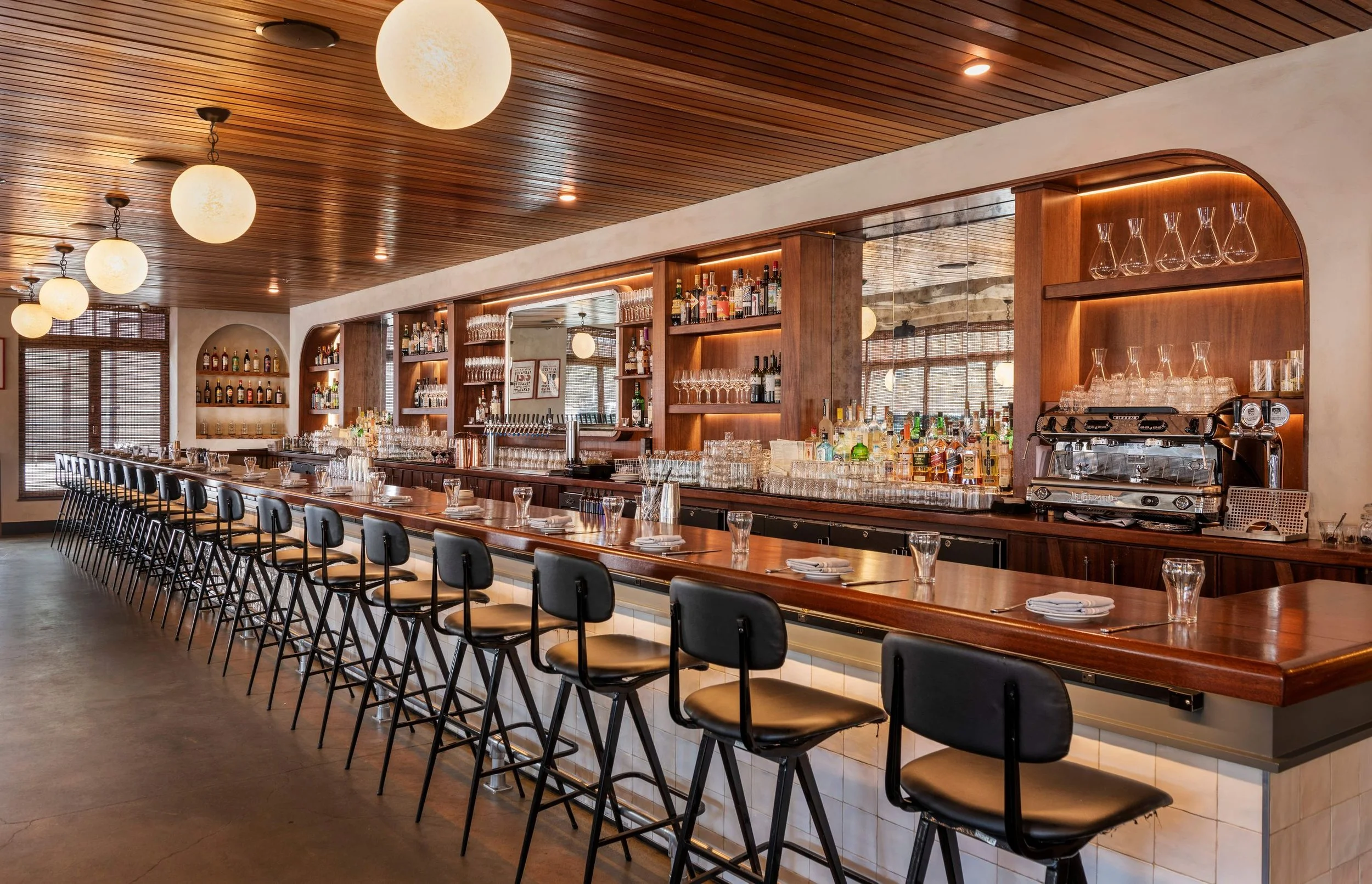
Renovation of Bar Volpe, Boston.
DS: Going back to inspiration, what are some places around the world where you feel most creatively charged?
JH: Barcelona, Spain — I’ve visited multiple times and love that it offers a little bit of everything: city, beach, mountains, historic charm, and modern energy. It’s one of those rare places where architecture, culture, and daily life all flow together seamlessly. Bologna, Italy — To me, it’s one of Italy’s more underrated cities. The vibrancy of its people, the food culture, and the sense of authenticity are infectious. It has the richness of Florence but feels more lived-in, less overrun, a place that still belongs to its locals. Martha’s Vineyard, Massachusetts — It’s my home away from home, a place filled with calm, natural beauty, and a kind of quiet magic that always resets my perspective.
DS: What about people, who are some people you find interesting?
JH: David Rockwell — for his theatricality and ability to tell stories through space, particularly in hospitality design. James Turrell — for redefining how we perceive light and space, reminding designers of the emotional potential of atmosphere. Anthony Bourdain — not a designer per se, but a master of curiosity and connection; his approach to culture and storytelling mirrors how I think about design.
—-
Find Jessica: